

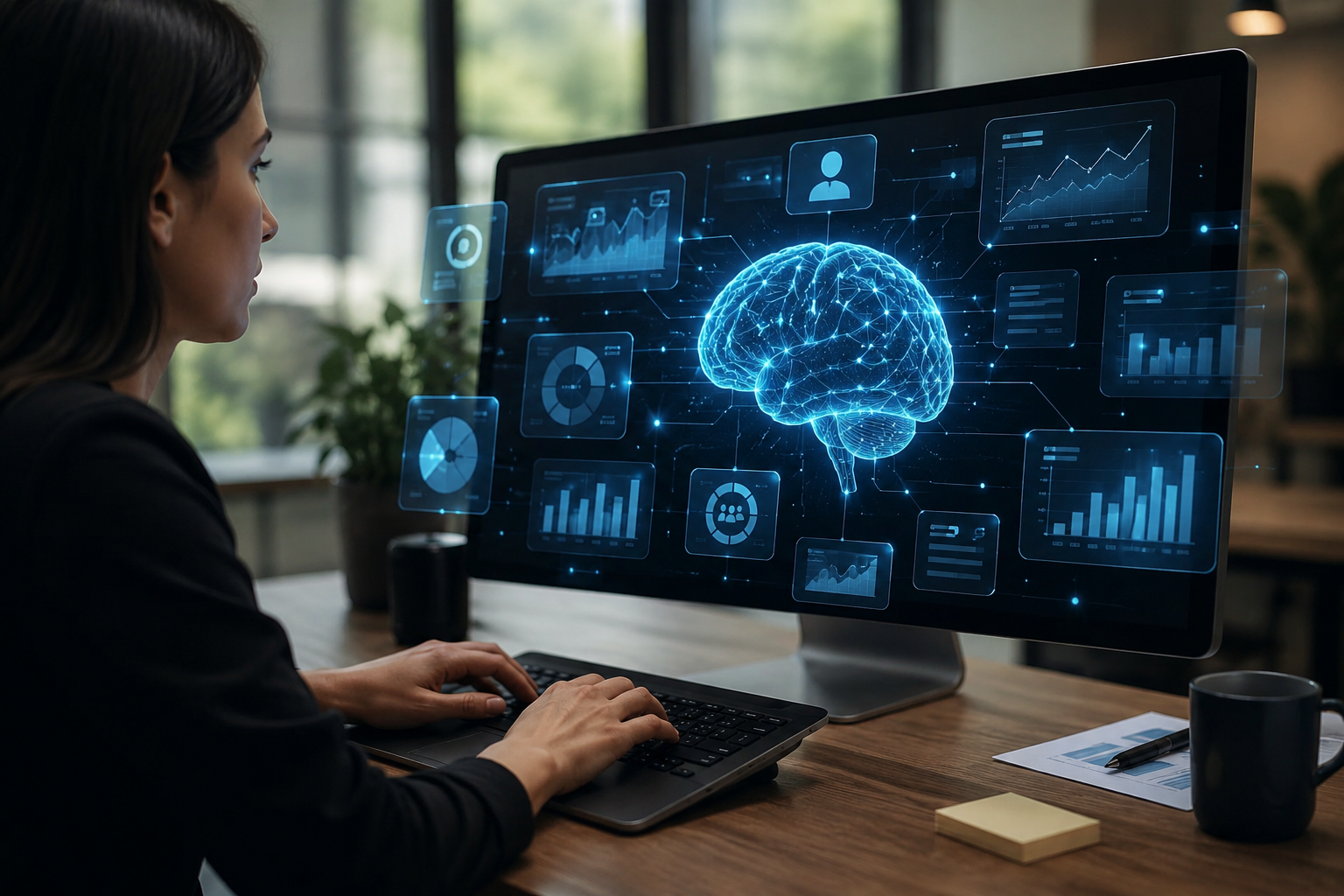
Marketing teams are handling more work than they did a few years ago. More platforms. More customer communication. More content demands. More reporting. More pressure to respond faster while keeping costs under control. That’s one of the biggest reasons businesses are investing in AI Tools for Marketing to help automate repetitive tasks, improve workflow efficiency, and manage growing marketing operations more effectively.
That’s one of the main reasons AI tools for marketing are becoming part of everyday business operations instead of optional software businesses test once and forget about them later.
Companies are not using AI just because it sounds modern. Most businesses are trying to solve operational problems:
- repetitive tasks
- slow response times
- inconsistent follow-ups
- content production delays
- overloaded marketing teams
- disconnected systems
The future of AI tools for marketing is not about replacing people. It’s about helping businesses manage growing workloads more efficiently while improving consistency across marketing operations.
Businesses that adapt early usually gain an advantage because they reduce manual processes before operational bottlenecks start slowing growth.
Companies like A+ Virtual Pro are already helping businesses integrate AI-powered workflows that improve marketing efficiency without forcing teams to completely rebuild how they operate.
Why AI Marketing Tools Are Growing So Fast
Marketing has become heavily data-driven and multi-channel at the same time.
Businesses now manage the following:
- websites
- SEO
- email campaigns
- social media
- customer support
- lead nurturing
- paid advertising
- CRM systems
- analytics dashboards
Handling all of this manually becomes difficult very quickly.
AI tools help businesses automate parts of these workflows while improving organization and response speed.
That’s why adoption continues growing across industries.
Businesses are realizing that AI is no longer limited to large enterprise companies with massive budgets. Smaller businesses are now using AI systems for:
- automated follow-ups
- content assistance
- scheduling
- customer communication
- lead qualification
- reporting automation
The technology is becoming more accessible, and businesses are using it to support operations instead of treating it like an experimental trend.
What the Future of AI Marketing Actually Looks Like
A lot of discussions around AI marketing focus too much on predictions and not enough on practical use.
The future is already starting to look very operational.
Businesses are moving toward systems where:
- leads are automatically organized
- follow-up emails trigger instantly
- customer inquiries receive immediate responses
- CRM updates happen automatically
- reporting dashboards update in real time
- marketing data becomes easier to analyze
This reduces delays and improves consistency.
Instead of teams spending hours manually organizing information, AI systems help automate repetitive administrative tasks so staff can focus more on strategy, customer relationships, and decision-making.
Learn more about AI Marketing in 2026: Trends, Tools, and Real-World Use Cases
AI Tools Will Continue Changing Content Marketing
Content creation is one of the biggest areas affected by AI.
Businesses now use AI-assisted tools to help with:
- blog outlines
- landing page drafts
- SEO planning
- product descriptions
- ad copy
- email campaigns
- keyword research
That trend will continue growing.
At the same time, businesses are also learning an important lesson:
fully automated content often performs poorly without human editing.
Search engines and customers still respond better to content that sounds natural, experience-based, and specific to actual business problems.
The future is likely a hybrid approach where:
- AI speeds up production
- humans refine messaging
- businesses maintain quality control
That balance is becoming increasingly important.
A+ Virtual Pro and other automation-focused service providers are helping businesses build content workflows that combine AI efficiency with human oversight instead of depending entirely on automation.
Learn about our Ahrefs Expert
The Future of AI in Customer Communication
One of the biggest operational problems businesses face is delayed communication.
Customers expect faster responses now.
Businesses lose leads because:
- inquiries sit unanswered
- follow-ups are inconsistent
- staff cannot keep up with volume
- customer service teams become overloaded
AI communication systems are helping businesses improve this area significantly.
Future AI systems will likely become more integrated with:
- CRM platforms
- booking systems
- email marketing
- customer support workflows
- sales pipelines
Instead of isolated chatbots, businesses are moving toward connected automation systems that help manage the entire customer journey more efficiently.
That does not mean every interaction should become automated. Human interaction still matters, especially for the following:
- complex questions
- sales consultations
- relationship building
- problem resolution
The goal is usually faster handling of repetitive communication while allowing staff to focus on higher-value conversations.
AI and Marketing Automation Will Become More Connected
Right now, many businesses still operate with disconnected tools.
One platform handles email marketing. Another manages CRM data. Another handles scheduling. Another handles analytics.
That fragmentation creates operational problems.
The future of AI marketing will likely focus heavily on connected workflows.
For example:
|
Marketing Process |
Future AI Workflow |
|
Lead Generation |
AI qualifies and routes leads automatically |
|
Email Campaigns |
Personalized automation based on user behavior |
|
Customer Support |
AI handles common inquiries instantly |
|
CRM Management |
Automated updates and tracking |
|
Reporting |
Real-time campaign performance analysis |
|
Content Planning |
AI-assisted keyword and topic organization |
Businesses are moving toward systems where information flows automatically between platforms instead of requiring constant manual updates.
SEO Will Continue Evolving With AI
SEO is already changing because of AI tools.
Businesses now use AI for:
- keyword clustering
- competitor analysis
- content optimization
- internal linking suggestions
- topic research
- content structuring
That will continue evolving.
However, businesses that rely entirely on AI-generated SEO content may struggle long term if quality drops.
Search engines are increasingly focused on:
- useful content
- topical authority
- relevance
- trustworthiness
- user experience
That means businesses still need the following:
- strategy
- editing
- industry expertise
- original insights
The future of SEO is likely a combination of:
- AI-assisted research
- human expertise
- operational consistency
- better content systems
Businesses that combine those elements effectively will usually outperform businesses depending entirely on automation.
Read our Best New Jersey Local SEO Experts for Barnegat Businesses
Businesses Will Need Better AI Strategy
One problem happening right now is over-adoption.
Some businesses are adding too many AI tools too quickly without solving actual operational issues.
That creates:
- disconnected systems
- workflow confusion
- duplicate subscriptions
- inconsistent reporting
- employee frustration
The future will probably favor businesses that use fewer tools more effectively.
Before implementing AI systems, businesses should understand:
- where bottlenecks exist
- which tasks waste time
- where leads get lost
- which workflows create delays
Then automation becomes useful because it solves real operational problems instead of simply adding software.
This is one reason businesses often work with implementation-focused providers like A+ Virtual Pro. Proper setup matters more than simply buying access to AI software.
Human Oversight Will Still Matter
One misconception is that AI will fully automate marketing departments.
Most businesses are not moving toward complete automation.
They still need people for:
- strategy
- creative direction
- decision-making
- customer relationships
- brand messaging
- quality control
AI is better at handling repetitive operational work than replacing business judgment.
That distinction matters because businesses that remove too much human involvement often end up with:
- generic messaging
- poor customer experience
- inaccurate communication
- weak brand positioning
The future of AI marketing will likely involve collaboration between automation systems and human teams instead of full replacement.
Common Areas Businesses Are Automating
Many businesses are already automating tasks like:
- email sequences
- lead routing
- appointment scheduling
- CRM updates
- customer follow-ups
- reporting dashboards
- social media scheduling
- content workflows
These are practical improvements that reduce workload while improving consistency.
For growing businesses, this creates scalability without increasing staffing requirements at the same speed.
FAQs About the Future of AI Tools for Marketing
Will AI completely replace marketers?
No. AI can automate repetitive tasks and improve workflow efficiency, but businesses still need people for strategy, creativity, customer relationships, and decision-making.
Are AI marketing tools becoming necessary?
For many businesses, yes. As marketing workloads increase, automation helps businesses manage communication, reporting, and lead handling more efficiently.
What industries are using AI marketing tools?
Almost every industry is adopting some level of AI marketing automation, including:
- healthcare
- real estate
- eCommerce
- legal services
- home services
- finance
- education
- digital agencies
Can small businesses benefit from AI marketing?
Yes. Small businesses often benefit significantly because automation reduces manual workload without requiring large teams.
What is the biggest challenge with AI marketing tools?
Implementation. Many businesses adopt too many disconnected tools without clear workflow planning.
Final Thoughts
Final Thoughts
The future of AI tools for marketing is becoming less about hype and more about operational efficiency.
Businesses are using AI to:
- improve communication
- automate repetitive work
- organize marketing systems
- speed up workflows
- support customer interactions
- improve scalability
The companies seeing the best results are usually not the ones chasing every new AI trend. They are the ones building practical systems that improve how daily operations function.
That’s where proper strategy and implementation matter most.
A+ Virtual Pro helps businesses integrate AI-powered marketing workflows that support real operational growth instead of adding unnecessary complexity. From automation systems to customer communication workflows and marketing support, businesses are increasingly looking for practical AI solutions that improve performance without overwhelming teams.
Ready to Build Smarter Marketing Systems?
If your business is dealing with:
- repetitive marketing tasks
- slow follow-ups
- disconnected workflows
- overloaded teams
- inconsistent customer communication
AI-powered automation may help improve efficiency while reducing operational pressure.
A+ Virtual Pro helps businesses implement AI marketing systems designed to streamline workflows, improve lead handling, and support scalable business growth with practical automation solutions built around real operational needs.